SERVICE REQUEST MANAGEMENT
Service request management software for internal teams
Manage service requests from intake to resolution with full visibility and control
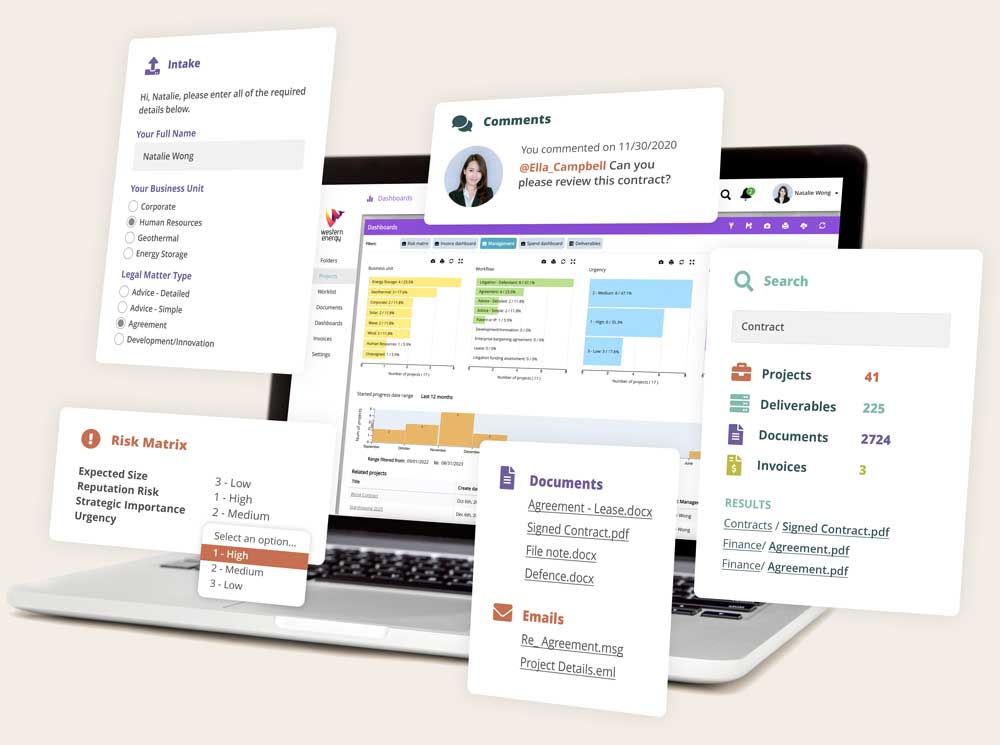
Dazychain is a service request management system designed to help internal teams capture, prioritise, and resolve service requests through a consistent, end-to-end process.
- Capture service requests through structured intake forms and self-service submission
- Route requests through predefined workflows with clear ownership
- Manage request processes with workflow automation and multi-stage approvals
- Track request status, backlog, and performance with real-time visibility and reports
Deliver more consistent internal service by standardising how requests are handled across teams.

Highly rated by legal teams using Dazychain to centralize and manage their legal matters.
Requests are coming from everywhere, and nothing is connected
In most organisations, service requests don’t follow a single, consistent path.
They arrive through email, shared documents, meetings, casual conversations, and ad hoc forms. Important details are often missing, requests are duplicated, and teams rely on email, research and time-consuming follow-ups to figure out what needs to happen next.
As request volume increases, this lack of structure leads to delays, inconsistent service delivery, and limited visibility into what’s actually being worked on.
Internal customers have no clear view of the status of their requests, creating dissatisfaction, complaints, and missed deadlines. Without a clear request management system, teams spend more time chasing information than resolving requests.
Built for internal service requests, not support tickets
Unlike traditional ticketing or help desk tools, Dazychain service request management software is designed for internal service delivery. It focuses on structured intake, workflow-driven processes, and full visibility across teams, rather than reactive support queues.
This makes it easier to manage complex internal requests that require coordination, approvals, and consistent processes.
What is service request management software?
Service request management software is a system used to capture, organise, and manage internal service requests through a structured process. This might be a legal matter, an HR complaint, a request for a credit card or support for the creation of a new contract.
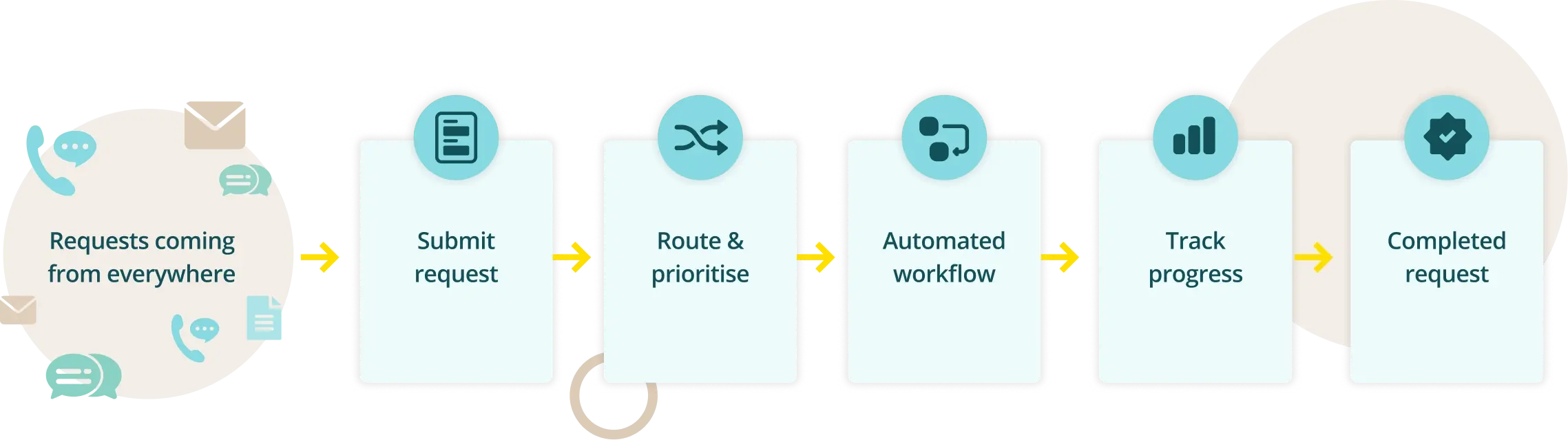
It standardises how requests are submitted, prioritised, and fulfilled, ensuring every request follows a defined lifecycle, from intake, through triage and workflow, to management and final resolution. This improves visibility, reduces manual effort, and helps teams deliver more consistent service across the organisation.
Manage service requests from intake to resolution
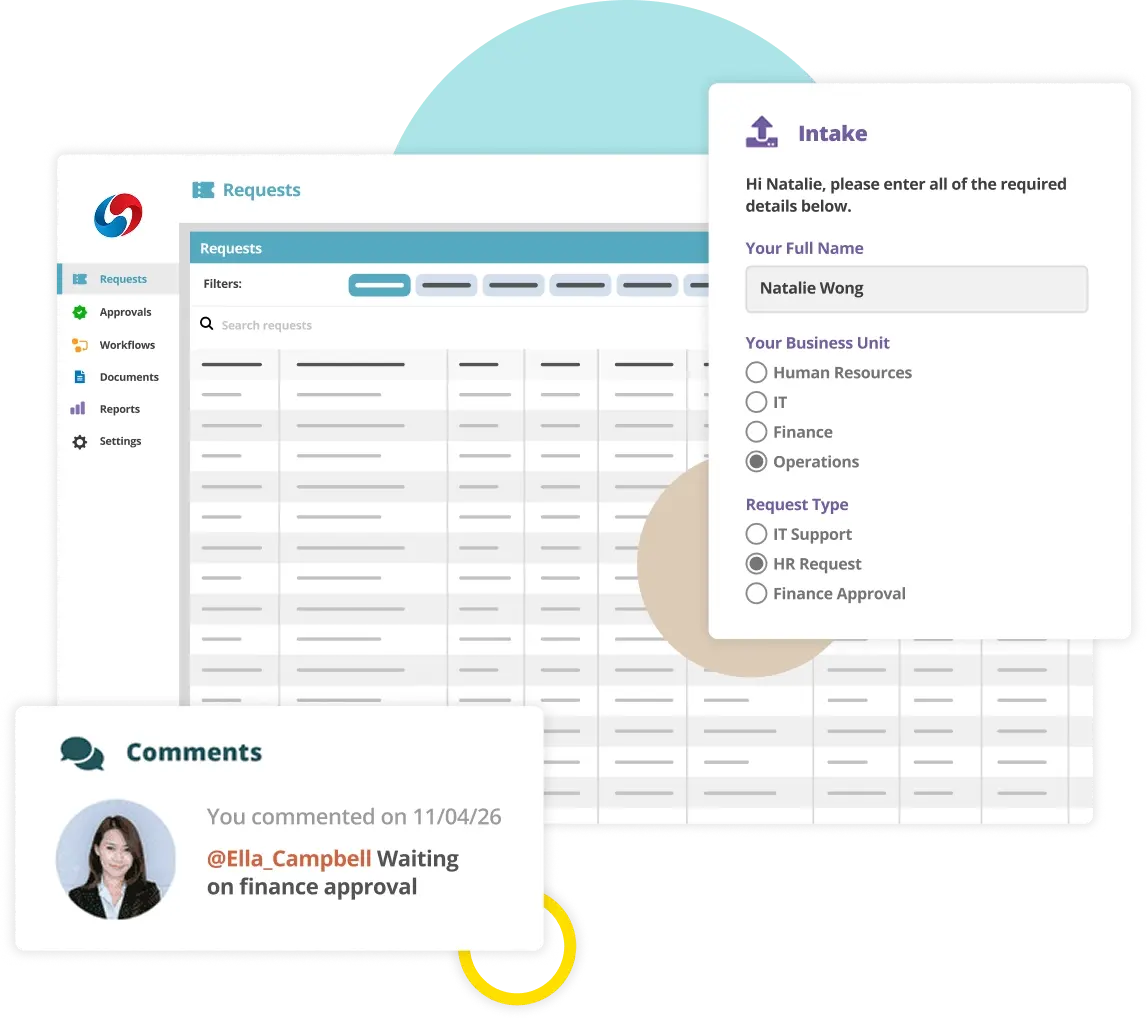
Capture requests with structured intake
The process starts with intake.
Structured request forms ensure that every service request is submitted by your internal clients with the right information from the beginning. This reduces back-and-forth, improves data quality, and enables requests to move through the process more efficiently.
Prioritise and route requests through clear triage
Once a request is captured, it needs to be assessed and routed correctly.
Requests are routed and triaged based on predefined workflows, ensuring each request follows the correct path from the moment it is submitted through to the correct team member.
This reduces bottlenecks, improves response time, and ensures that high-priority service requests are handled first.
After triage, requests move through a defined workflow.
Workflow automation ensures that each step in the service request process is consistent and repeatable. Tasks can be assigned automatically, approvals can be triggered where needed, and requests can progress through different stages without manual intervention.
This reduces manual effort, improves operational efficiency, and supports consistent request fulfilment across teams. This ensures that service requests are fulfilled in a structured and repeatable way, improving consistency and reducing delays in the overall request process.
This ensures that every service request follows a consistent path, reducing delays and improving how work is delivered across teams.
Track progress with visibility and ownership
Visibility is critical to effective request management.
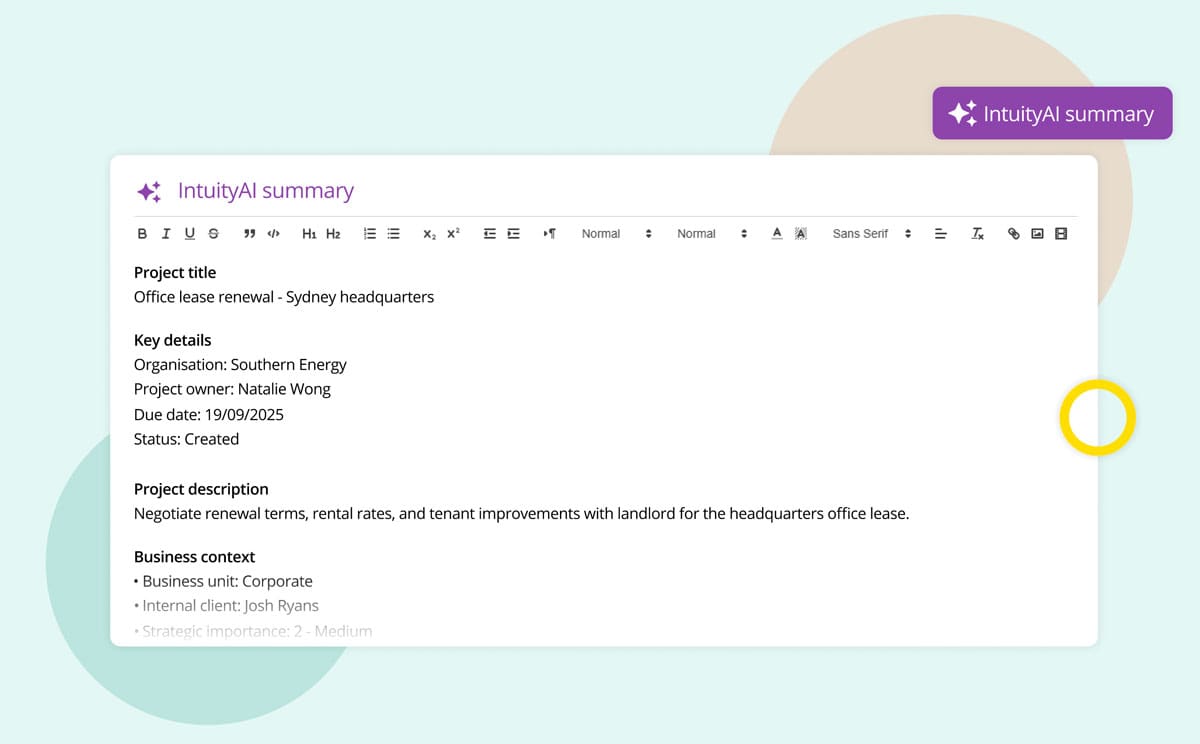
Teams need to understand what requests are in progress, who is responsible for them, and how long they are taking to complete. Real-time tracking makes it easier to monitor request status, manage request backlog, and identify delays. Team members can view, share and download team and individual performance reports.
Data and reports create ownership ensuring accountability at every stage, helping teams resolve requests more efficiently, and maintaining control over the entire request process.
Standardise and scale your request process
As organisations grow, so does the complexity of managing service requests.
Without a standardised request process, teams follow inconsistent approaches that lead to delays and inefficiencies. A structured system brings consistency across teams by defining how requests are captured, prioritised, and fulfilled.
This more structured enterprise service management approach makes it easier to scale operations, reduce manual effort, and maintain high service quality as request volume increases.
Improve the service request management process
A structured service request management process helps teams handle requests more consistently from start to finish.
By standardising how service requests are submitted, routed, and fulfilled, teams can reduce delays, improve response times, and ensure that every request follows a clear and predictable path.
This improves overall service delivery while making it easier to manage request volume and maintain quality as the organisation grows.
Support common service requests with self-service and structure
Internal teams manage a wide range of service requests, from onboarding and off-boarding processes and approvals, to document reviews, and operational workflows. These service requests can vary in complexity, but all benefit from a consistent request management system that improves how requests are handled and completed.
A structured approach allows these request types to be standardised and managed consistently. Requests can be organised into clearly defined request types, similar to a service catalog, making it easier for users to select the right request and provide the required information.
Improve service delivery with reporting and analytics
Effective service request management goes beyond tracking requests, it provides insight into how work is being delivered.
Reporting and dashboards provide visibility into request volume, workload, and overall performance, helping teams identify bottlenecks and improve how service requests are handled over time.
This gives teams the insight they need to improve service delivery, optimise workflows, and make better operational decisions over time.
Connect with the tools your team already uses
Service request management works best when it integrates with existing tools.
Dazychain integrates with platforms such as Microsoft 365, Outlook, Gmail, and DocuSign, helping teams capture requests, manage documents, and maintain a complete record of work without duplicating effort.
This connected approach improves efficiency, reduces manual data entry, and ensures that service requests and related information stay aligned across systems.
Control access and maintain accountability
Managing internal service requests often involves handling sensitive information and multiple stakeholders.
A structured system helps ensure that security access is controlled, ownership is clearly defined, and all activity is tracked. Audit trails provide visibility into actions taken on each request, supporting accountability and compliance while reducing risk.
Configurable for different internal teams
Service request management is not limited to a single department.
The platform is designed to support different types of internal workflows and request processes with the ability to create and segment security groups across the organization.
This includes teams such as HR, legal, IT, finance, procurement, and operations, each of which can configure request types, workflows, and processes to match their specific requirements while maintaining a secure, consistent system across the organisation.
This flexibility allows organisations to manage service requests across teams without losing confidentiality, structure or visibility.
Service request management capabilities
Service Request Management Software FAQs
Service request management software helps organisations capture, prioritise, and resolve internal service requests through a structured and consistent process.
As part of a broader service management approach, this ensures that internal requests are handled consistently across teams and processes.
The process typically includes request intake, triage, workflow execution, tracking, and resolution.
Ticketing systems are generally designed for customer support. Service request management software focuses on internal requests, with structured intake, workflow automation, issue, project and matter management, and greater visibility across teams.
By standardising how requests are handled and improving visibility into workflows, teams reduce delays, improve response times, and deliver a higher standard of internal customer support.
Start managing service requests with clarity and control
Give your team a better way to capture, prioritise, and resolve requests. Improve how your team manages service requests, legal and HR matters, and internal services with a more structured service management approach.
Book a demonstration to see how Dazychain can help you manage service requests from intake to resolution with greater efficiency and visibility.